
Utah's Supply Math Is Finally Turning — Here's What Comes Next
Market Minute
June 2026 Newsletter
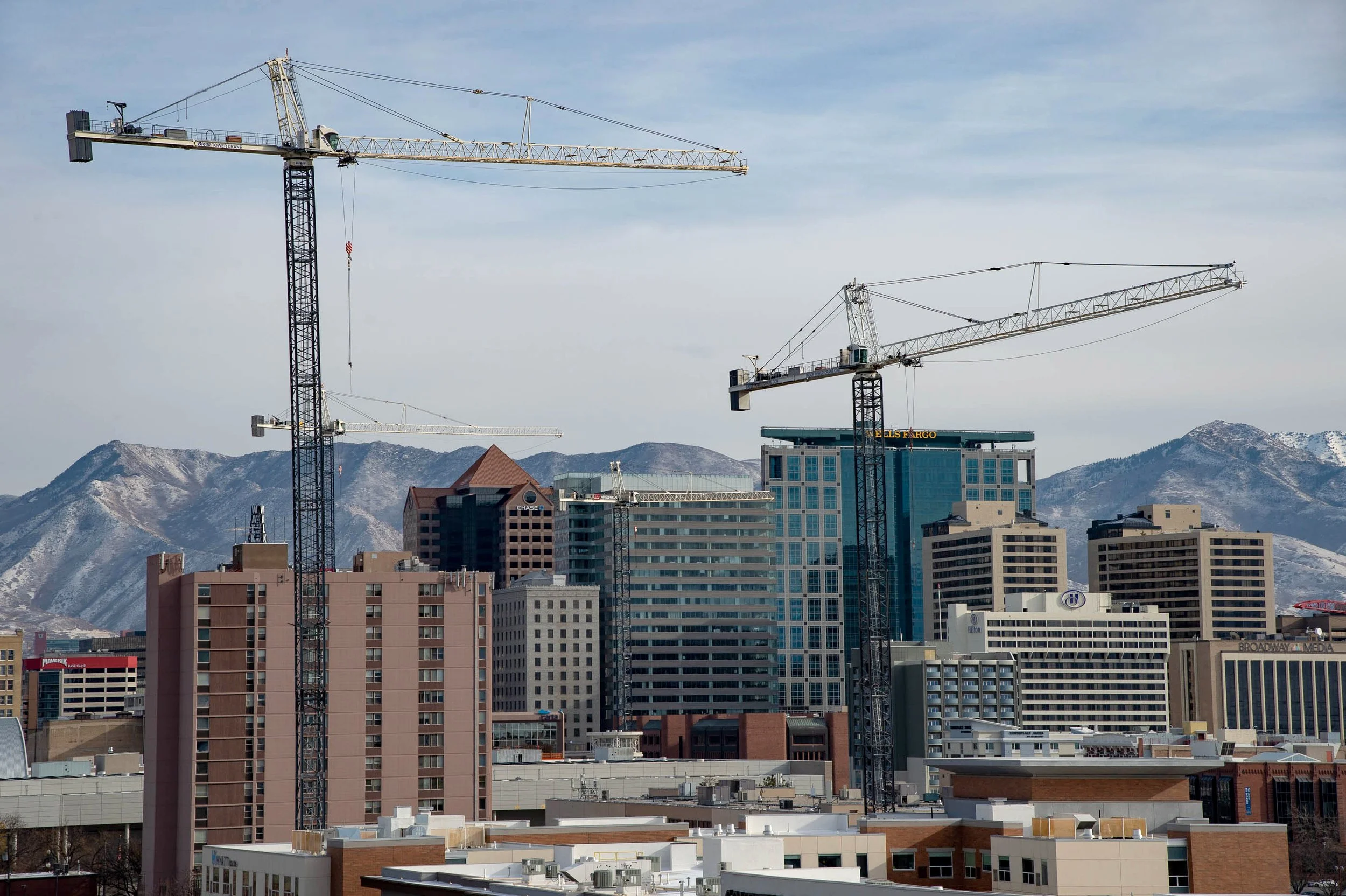
The story of Utah multifamily over the past two years has been defined by oversupply, but the forward-looking data is telling a different story. According to CBRE's 2026 multifamily market outlook for the greater Salt Lake City area, approximately 9,000 units are projected to be delivered across the entire Wasatch Front between 2026 and 2028. That’s fewer than were delivered in 2025 alone, which saw 9,896 completions, and well below the 11,000-plus units delivered in 2024. That is a fundamental inflection in supply trajectory. The active construction pipeline has already contracted sharply, falling from nearly 12,000 units underway two years ago to approximately 5,500 units as of early 2025 — a pullback driven by elevated interest rates and rising build costs that shows no sign of reversing quickly. Critically, Salt Lake City is still one of the Intermountain West's leaders in absorption rate, outperforming Phoenix, Denver, and Seattle in 2025; a demand-side fact that rarely surfaces amid all the concession noise.
The structural demand anchors that make Utah's medium-term outlook compelling haven't changed. Employment growth for the Salt Lake metro is projected at 1.7% for 2025, adding over 13,800 jobs driven by continued expansion in tech, healthcare, and education, with Silicon Slopes continuing to pull workers into Utah County and the broader Wasatch Front. University of Utah economist James Wood points to Utah's disproportionate share of young households aged 25–34 as a structural demand advantage that most other states lack — a demographic squarely in its peak renting years. With homeownership still out of reach for most Utah households, those renters aren't going anywhere. Owners who have managed through today's concession cycle with well-maintained assets and stable tenant bases aren't just surviving — they are positioning for a recovery that the supply math now makes increasingly likely.
Key Takeaways:
The Wasatch Front is projected to add roughly 9,000 total units over 2026–2028 combined — a dramatic deceleration from the 11,000+ delivered in 2024 alone.
Net absorption has continued to exceed deliveries in greater Salt Lake City area despite the supply wave, indicating healthy underlying demand fundamentals.
Employment growth of 1.8% year-over-year is more than double the national rate of 0.8%, with nearly 29,200 net jobs added over the 12 months ending in June 2025.
Active permit mix is 57% multifamily, the most skewed of any Utah metro, concentrated in the downtown core and along the Lehi/Draper Silicon Slopes corridor.
Sources: Building Salt Lake / CBRE 2026 Salt Lake City Multifamily Market Outlook (March 2026); MMG Real Estate Advisors SLC 2025 Forecast; REIPrime Salt Lake City Market Data (April 2026); Yardi Matrix SLC Multifamily Report (October 2025); Kem C. Gardner Institute / Building Salt Lake 2026 Residential Forecast
‘Nxt Level’
Strategic Shift: Defense to Offense

Defense: Physical occupancy tells you how many units have a body in them. Economic occupancy tells you how much of your potential income you are actually collecting — and in a market that has spent two years trading rent for occupancy, the gap between those two numbers is often where owner returns quietly disappear. Economic occupancy is calculated by comparing the rent actually collected to the gross potential rent a property would generate if every unit were leased at full market rate with no discounts, no delinquencies, and no unpaid balances. A property can sit at 95% physical occupancy and still post economic occupancy well below that threshold if concessions are eroding effective rent, delinquent tenants are occupying units without paying, or below-market lease terms (loss to lease) are dragging down the rent roll. During the supply-driven concession cycle of the past two years, many Wasatch Front properties were doing exactly that — reporting strong occupancy numbers while quietly leaving significant revenue on the table.
That dynamic is now beginning to shift. As physical occupancies across our portfolio have climbed above 94% and concessions have started to level off or decrease in a number of submarkets, we have moved our operational focus from filling units to capturing revenue — a meaningful distinction.
Offense: In practice, that means two things: pulling back on concessions where market conditions allow and replacing discounted asking rents with firmer effective rents on new leases, and sharpening collections discipline to narrow the gap between what is scheduled to be collected and what is actually hitting the bank account. These two levers, reduced concession drag and tighter delinquency management, are what move economic occupancy upward even when physical occupancy is already strong. For owners, this is the transition from a defensive posture to an offensive one: you earned the occupancy, now the work is making sure it converts to NOI.
Are you looking into possibly acquiring a project? Please reach out to us and we can provide more information about the due diligence services we provide. You can reply directly to this email for more info.
Value of the Month

June’s Value of the Month is: Express Gratitude. We are kind to everyone and recognize their contributions. Gratitude keeps us humble and helps us achieve our full potential.
Ask the Editor

Question: What types of properties to you guys manage?
Answer:This is a great question! Our strategy and capabilities have shifted over the last 1-2 years. Our tools, staff, costs and infrastructure lend best to managing class A/B apartment communities with 80+ units with the ideal size being 100+. For townhome communities this shifts to about 70+ units.
However, we are always willing to underwrite and analyze any property whether it be an existing project or something in development. We are often able to find cost efficiencies for portfolios of multiple properties which allow us to effectively manage properties smaller than what is mentioned above.
As always, feel free to send any questions about the apartment world to sales@nxtmgt.com, and we would love to feature and answer the questions in next month’s newsletter.
Until next time,

