
Hidden in Plain Sight: How Utah's Fee Transparency Laws Are Changing the Rules for Rental Owners
Market Minute
August 2026 Newsletter
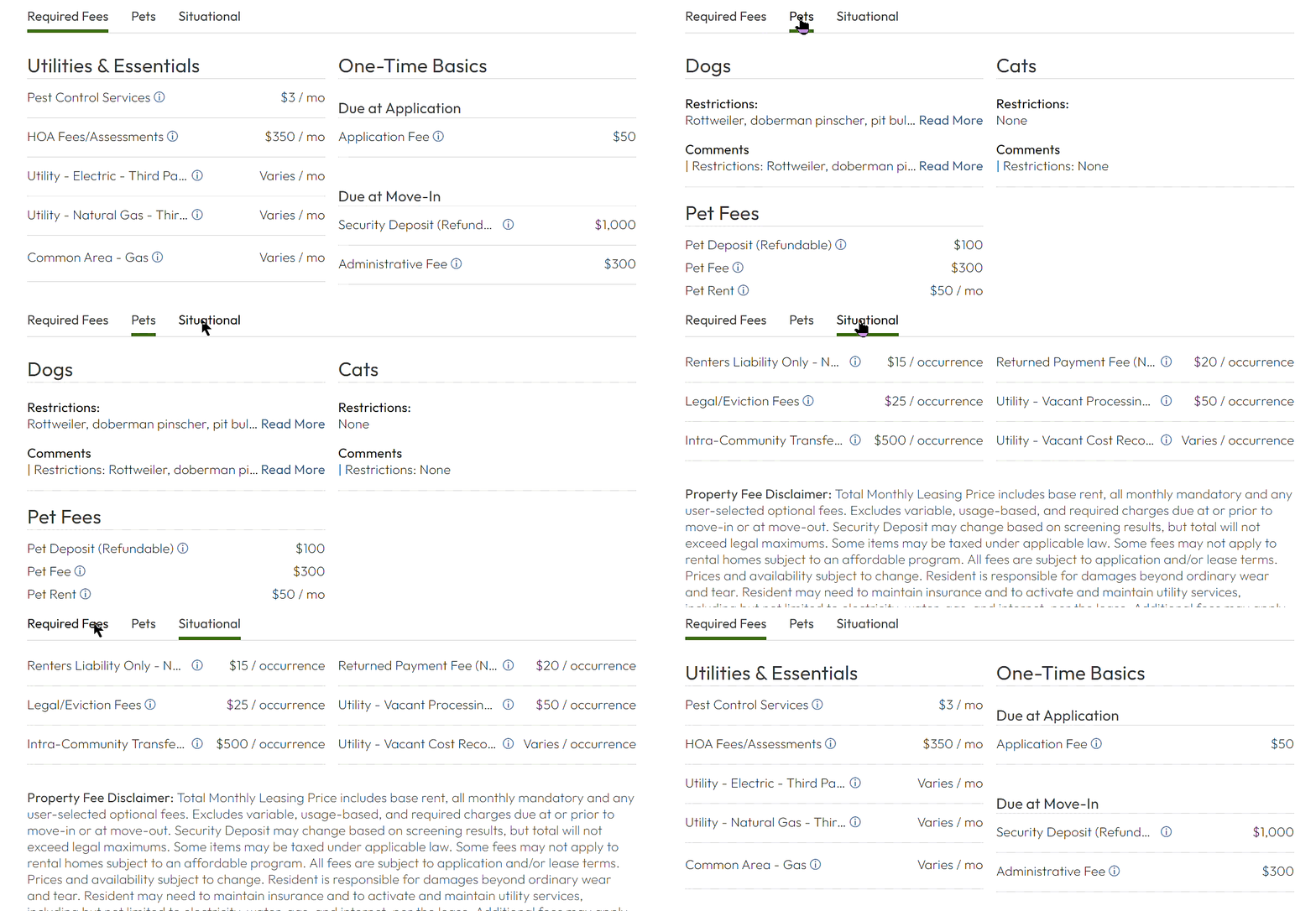
For years, multifamily operators advertised base rent and disclosed the rest somewhere in the fine print. That model is now under coordinated legal pressure and Utah is no longer a bystander. Utah's HB29, the Unfair and Deceptive Pricing Amendments bill, passed the House by a near-unanimous 70-to-3 vote and requires rental listings to disclose the total price of renting a unit upfront, in the advertisement itself, not buried in the lease. That builds on HB 182, enacted in May 2025, which already requires landlords to provide written disclosures before collecting any payment, including a good-faith estimate of rent and all recurring fees, screening criteria, and refund terms. The fees drawing the most scrutiny: valet trash charges, liability waiver programs, pest control add-ons, and lease initiation fees — are precisely the line items that have quietly inflated effective monthly costs well above advertised rents. HB29's sponsor, state Rep. Tyler Clancy, put the standard simply: "The price you see is the price you pay" — and notably, the Utah Rental Housing Association, which represents thousands of landlords, raised no objections to the bill.
The owner-level risk is the piece not getting enough attention. Most owners review their management agreement and monthly report, but few have visibility into how their property manager is structuring and disclosing fees to tenants on their behalf. Non-compliance now carries significant risks including FTC warning letters and potential litigation under renter consumer protection statutes; exposure that flows directly to the owner of record. Nationally, the trend is accelerating: Massachusetts, Colorado, Connecticut, Nevada, New Mexico, Minnesota, and New York already require all-in pricing or full fee disclosure in advertising, with more states expected to follow. For Utah owners, the question is no longer whether these standards will apply, they will, but whether your management company has already updated its leasing process for HB 182, and whether your listing language is ready for HB29's July 1, 2026 effective date. Operators who treat this as a checkbox will be managing exposure. Those who treat it as a standard will be building tenant trust that pays dividends at every stage of the leasing process.
Key Takeaways:
Utah HB 182, effective May 2025, already requires written pre-application disclosures including a good-faith estimate of all rent and recurring fees — owners who haven't updated their leasing process may already be out of compliance.
Utah HB29 goes further, requiring total-price disclosure in rental listings and advertisements themselves, with a July 1, 2026 effective date.
Common fee types now under scrutiny include valet trash, pest control, liability waiver programs, package handling, lease initiation charges, and payment processing fees — many historically disclosed only at lease signing.
Non-compliance risk extends beyond fines — FTC warning letters and renter litigation under consumer protection statutes are live exposure points for operators and, by extension, owners.
The accountability question every owner should be asking: has your property manager audited your lease templates, listing language, and fee disclosure workflows against HB 182's current requirements and HB29's upcoming standard?
Sources: KSL.com — Proposed Utah Bill Takes Aim at Hidden Rental Fees (February 2026); Salt Lake Tribune — Hidden Fees in Utah Increase the Price of Rent (February 2026); TierOne Real Estate — Utah Landlord Tenant Law Complete Guide (April 2026); Entrata — 2025 Fee Transparency Laws in the Rental Market & What to Watch in 2026 (December 2025); ApartmentIQ — Multifamily Fee Transparency Compliance Roadmap (February 2026); NAA — Federal Fee Transparency Rule Advances While States Chart Their Own Course (March 2026)
‘Nxt Level’
Budget Camps: Looking to 2027

Every August, Nxt pulls regional managers, property managers, maintenance leads, and other corporate team members off their normal rhythm for budget camp. Over 2 full days, teams laid the foundation for their 2027 operating budget for the communities we manage one line at a time; testing rent growth assumptions against submarket comps, pricing renewal-versus-new-lease trade-offs, setting realistic turnover and vacancy loss, rebidding contract services, and sequencing CapEx based on property needs. The format matters as much as the output. When a property manager and a regional manager sit across a table instead of trading spreadsheet versions by email, weak assumptions get challenged in the moment, and everyone involved has greater accountability and is held to a higher standard.
For our partners, this is the document they’ll hold us to for 2027, which is exactly why we don't make uneducated assumptions. A budget padded with soft expense forecasts and low rent growth is easy to beat and tells you nothing about how the asset is actually performing. What comes out of budget camp is a plan with the reasoning still attached, so when a variance shows up in month seven, the conversation is about what changed, not about what we guessed. Soon, draft budgets will go out to ownership, and we'd rather have the hard conversation now than in next June's variance report.
Value of the Month

August’s Value of the Month is: Be Loving. Every person has inherent worth. We care for everyone with love and encourage each other to constantly improve, achieve balance in life and find joy.
Ask the Editor

Question: Are resident events actually worth it, or can that money be best spent elsewhere?
Answer: To answer this question, I would like to share the perspective from a property manager who manages one of our premier properties in the Lehi area:
“Resident events give us an opportunity to connect with residents outside of rent payments, work orders, lease renewals, or conflicts/issues. They allow residents to feel seen and appreciated while giving the office team a chance to build genuine relationships with the people who call our community home.
The key is consistency. One event here and there probably isn’t going to change much. But when residents know there is something happening every month, they start to anticipate it. They bring their families & friends, invite their neighbors, stop by the office more often, and actually get to know the team. That is when you start building a community instead of just managing apartments.
I also think those relationships pay off in ways that are harder to put on a spreadsheet. Residents who feel connected to their community are more likely to communicate with us, participate, leave reviews, refer friends and hopefully think twice before moving out when renewal time comes around. It also makes the harder conversations easier because we already have a relationship with them.
Do resident events have to be expensive? Absolutely not. Some of the best events are simple. I would rather spend a smaller amount consistently throughout the year than blow the entire budget on one huge event.
For me, resident events aren't just an expense, they're an investment in resident experience, retention, and the overall culture of the community. When they're done well and done consistently, I absolutely believe they're worth it.
”As always, feel free to send any questions about the apartment world to sales@nxtmgt.com, and we would love to feature and answer the questions in next month’s newsletter.
Until next time,

